Four Great Academies
Introduction
The Four Great Academies of ancient China represent a cornerstone of the country's educational and cultural heritage. More than just places of learning, they were vibrant centers of philosophical discourse, scholarly debate, and cultural preservation. Attracting prominent figures like Confucian scholars, poets, and statesmen, these institutions fostered intellectual growth and shaped China's cultural landscape. Crucially, the Four Great Academies played a pivotal role in shaping the imperial examination system, which for centuries governed China and influenced its social mobility.
While there's some historical debate regarding the definitive list, reflecting evolving perspectives on their influence, two versions are traditionally recognized: Yingtian Academy, Yuelu Academy, Bailudong Academy, and Songyang Academy; or the same list with Shigu Academy replacing Songyang Academy. The 1998 China National Post stamp series solidified the officially recognized list as Yingtian Academy (in Suiyang), Yuelu Academy, Bailudong Academy, and Songyang Academy, a version that has since gained widespread acceptance. These renowned centers of learning fostered intellectual growth, cultural exchange, and the dissemination of Confucian values.
The Four Great Academies
Yingtian Academy
Yingtian Academy, located in Shangqiu, Henan province, was one of the most influential academies of the Northern Song Dynasty (960-1127). Established in 1009 AD, the academy was initially a private school founded by Cao Cheng, a native of Songzhou. Emperor Zhenzong officially recognized the academy, naming it Yingtianfu Academy after Songzhou was elevated to Yingtianfu in 1006. This royal endorsement brought widespread fame to the institution, solidifying its status as one of the four major academies of the era.
Unlike many other academies of its time, which were often situated in scenic mountainous areas, Yingtianfu Academy was established in a bustling urban setting. This unique location contributed to its accessibility and prominence. The academy's predecessor, the Nandu School, was founded by Yang Que during the Later Jin period of the Five Dynasties, further emphasizing its historical significance.
The academy gained prominence through the involvement of notable figures such as Yan Shu and Fan Zhongyan. Fan Zhongyan, a respected scholar and statesman, emphasized the importance of virtue in education, encouraging students to prioritize moral development over success in imperial examinations. His "Sequence of Learning," which outlined the progression from learning to questioning, thinking, discerning, and action, became a cornerstone of the academy's educational philosophy.
In 1043, Emperor Renzong of Song renamed Yingtian Academy as Nanjing National Confucian Temple, elevating its status to one of the top academic institutions of the Northern Song Dynasty. The academy's legacy includes a stele inscription commemorating Fan Zhongyan's teachings and the establishment of a library to honor his contributions.
Bailudong Academy
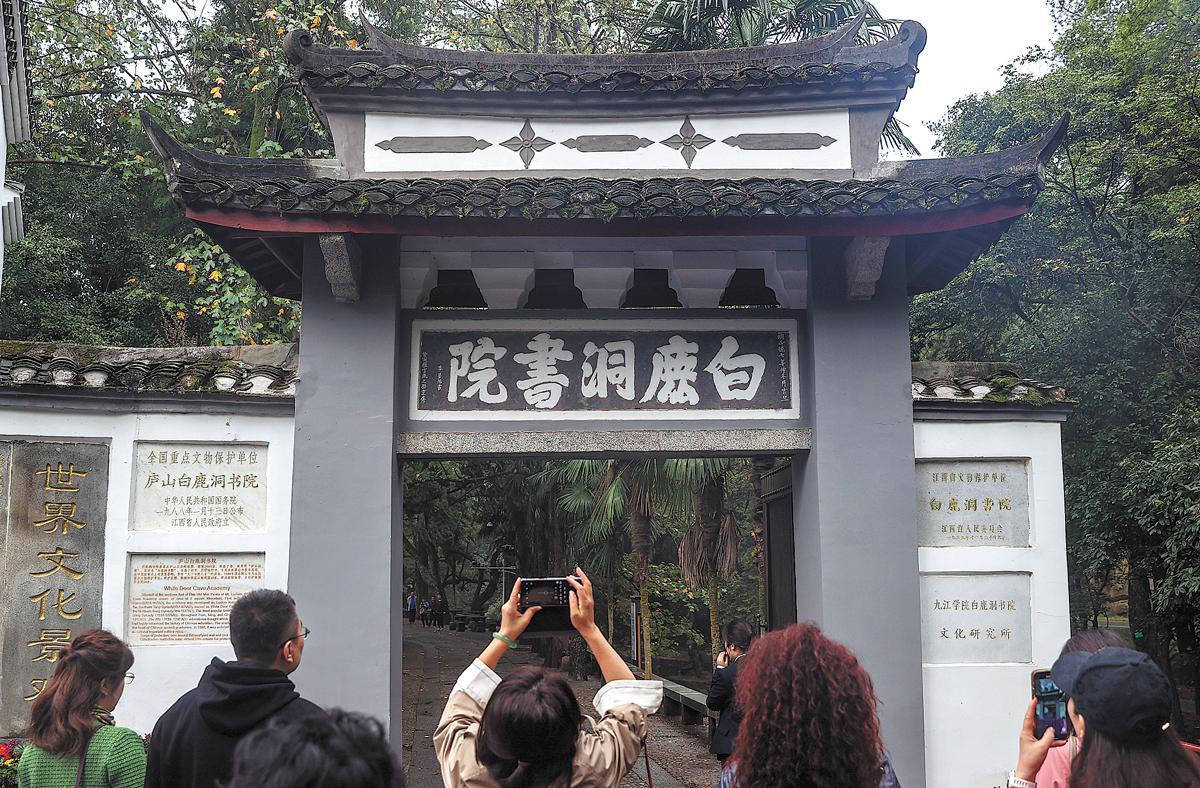
Bailudong Academy, also known as White Deer Grotto Academy, is located at the foot of Lushan Mountain in Jiujiang, Jiangxi province. Its history dates back to the Tang Dynasty (618-907) and Song Dynasty (960-1279). The academy's name originates from the story of scholar Li Bo and his brother Li She, who raised a white deer in seclusion to fetch study materials. This symbolic connection to the deer inspired the academy's name and legacy.
In 940, the valley's "kiosk" was transformed into a government-sponsored school, and by 1179, Bailudong Academy emerged as a renowned center of learning. Zhu Xi, one of the most influential Confucian scholars, revitalized the academy, turning it into a prominent educational institution that attracted notable scholars and produced outstanding graduates.
Bailudong Academy's historical significance extends beyond education. During the late Ming and early Qing dynasties, it served as a venue for cultural exchanges between Chinese and Western scholars. Matteo Ricci, an Italian Catholic missionary, interacted with the academy's headmaster and students, introducing Western disciplines like mathematics and Christianity. This exchange represents a noteworthy chapter in China's educational and cultural history.
Today, Bailudong Academy continues to promote traditional Chinese culture through educational activities, study trips, and international academic seminars. It has been recognized as a National Primary and Secondary School Study Practice Education Base, ensuring its legacy as a center for cultural preservation and academic exchange.
Yuelu Academy
Yuelu Academy, located in Changsha, Hunan province, is another of the Four Great Academies. Established during the Northern Song Dynasty, the academy became a prominent center for Confucian learning and philosophical discourse. Its picturesque location at the foot of Yuelu Mountain added to its appeal, attracting scholars and students from across China.
The academy's curriculum emphasized the study of Confucian classics, fostering intellectual growth and moral development. It played a significant role in shaping the imperial examination system and producing talented scholars who contributed to China's governance and cultural advancement.
Yuelu Academy's legacy continues to thrive, serving as a symbol of China's rich educational heritage. It remains a popular destination for visitors seeking to explore its historical significance and experience the atmosphere of ancient Chinese learning.
Songyang Academy
Situated on the southern side of Songshan Mountain in Dengfeng city, Henan province, Songyang Academy is a key cultural and educational institution that exemplifies the rich history of Confucian education in China. Originally established during the Northern Wei Dynasty (386-534), it has been a significant center for Confucian learning throughout the centuries.
The academy was first constructed in 484 as a site for Buddhist activities. Under Emperor Sui Yang, it became a Taoist site, and in 1035, Emperor Song Renzong renamed it Songyang Academy, marking its transition to a center of Confucian scholarship. This change heralded its rise as a renowned institution for higher learning and philosophical discourse, particularly under the influence of the rationalistic Confucian school.
Songyang Academy gained prominence as a hub for Confucian thinkers, with notable figures such as Cheng Hao, Cheng Yi, Sima Guang, Fan Zhongyan, and Zhu Xi lecturing there. It played a critical role in the development of Cheng-Zhu Neo-Confucianism, which became the dominant form of Confucian thought in later dynasties. Cheng Hao and Cheng Yi, masters of the Luo School, spread their theories widely, solidifying the academy's status as a bastion of Confucian ideology.
The academy is also notable for its unique architectural and natural features, including the "General Cypress",a nearly 4,500-year-old tree considered the oldest in China. Known as the "Original Cypress", it was honored as the Second Great General by Emperor Wu of the Western Han Dynasty (206 BC-AD 24), underscoring its cultural and historical significance.
Shigu Academy
Shigu Academy, located in Hengyang, Hunan province, boasts a history spanning over 1,200 years. Established during the Tang Dynasty (618-907), the academy reached its zenith during the Song Dynasty (960-1279), earning its place among the Four Great Academies. Its longevity and influence extended through six dynasties, including Tang, Song, Yuan, Ming, and Qing.
Renowned for its picturesque landscape, Shigu Academy attracted numerous scholars, poets, and celebrities, including Su Shi, Zhou Dunyi, Zhu Xi, and others. The academy's graduates include prominent figures such as Wang Juren, Peng Yulin, and Qi Baishi. Its reputation drew visits from historical luminaries like Zhuge Liang, Du Fu, Han Yu, and Xin Qiji.
Despite its destruction during Japanese bombings in 1944, Shigu Academy was rebuilt in 2006, restoring its function as an educational institution and cultural hub. The academy now hosts lectures, collects books, and offers sacrifices to ancestors, promoting traditional Chinese culture. It has also established intangible cultural heritage teaching bases, integrating local art forms like Hengyang Xiang Opera and Hengzhou Huagu Opera into its curriculum.
Legacy and Influence
The Four Great Academies have left an enduring legacy in Chinese education, culture, and intellectual history. They were instrumental in shaping the imperial examination system, which served as a meritocratic pathway for social mobility and governance. Their emphasis on Confucian values and moral development influenced generations of scholars and leaders.
These academies also played a pivotal role in preserving and disseminating Chinese cultural heritage. They served as hubs for philosophical discourse, scholarly debate, and cultural exchange, attracting some of the most prominent figures in Chinese history. Their contributions to education extended beyond their respective regions, influencing the development of academies across China.
In modern times, the legacy of the Four Great Academies continues to thrive through efforts to preserve and promote traditional Chinese culture. These academies have been restored and revitalized, hosting educational activities, cultural exchanges, and academic seminars. They serve as symbols of China's rich educational heritage and cultural resilience, ensuring their influence endures for future generations.
The Four Great Academies represent a unique chapter in China's history, embodying the spirit of intellectual pursuit, cultural preservation, and moral development. Their legacy is a testament to the enduring importance of education and culture in shaping a nation's identity and progress.








